Comeback Tanzania Adventure

Destination · Western Wilderness

Katavi

Tanzania's most remote national park. Buffalo herds in the thousands, hippo pods so dense they stack on top of each other.

4,471km²
RemoteFly-in
MassiveBuffalo Herds
Dry-seasonSpectacle
Scroll ↓
Katavi · By the Numbers

The Katavi at a Glance

The scale and character of this destination, briefly.

4,471
km²
Remote
Fly-in
Massive
Buffalo Herds
Dry-season
Spectacle
About Katavi

An Katavi Primer

Everything worth knowing before you visit.

Katavi receives roughly 2,000 visitors a year — most parks do that in a week.

The reason to go is solitude and scale: dry-season concentrations here are mythic. Buffalo herds of 2,000+ individuals. Hippo pods with literally hundreds of animals competing for the last river pools. No crowds, no vehicles on the horizon.

Katavi · Wildlife Guide

What You'll See

The species you can realistically expect in Katavi — with honest context on season and where.

Cape Buffalo
Syncerus caffer Year-round
Cape Buffalo
Massive herds of 500+ in the dry season. More fatalities per year than lions — respect the horns.
Hippo
Hippopotamus amphibius Year-round
Hippo
Pods of 10–30 in the rivers and swamps. Africa's deadliest large mammal — more human fatalities than lions.
Lion
Panthera leo Year-round
Lion
The Serengeti holds 3,000+ lions — the densest population on Earth. Look for coalitions of 4–6 males in Seronera.
Elephant
Loxodonta africana Year-round
Elephant
African bush elephants, up to 6 tonnes. Matriarch-led family groups of 15–50 individuals.
Leopard
Panthera pardus Year-round
Leopard
Solitary, nocturnal, and the hardest of the cats to spot. Riverine forests along Seronera are the best bet.
Zebra
Equus quagga Year-round
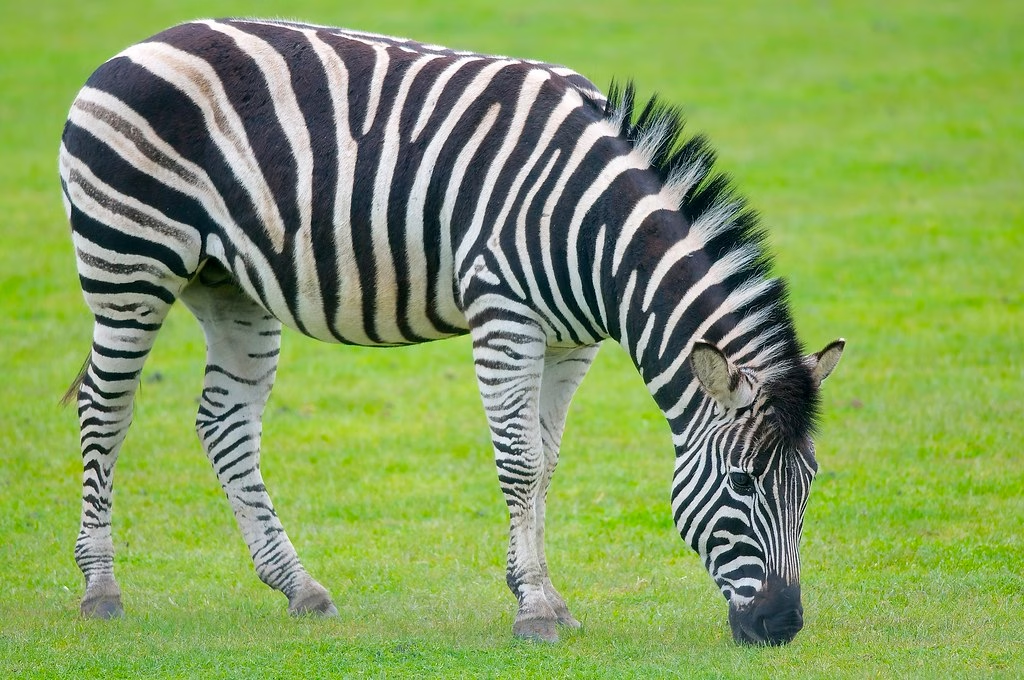
Zebra
250,000 travel with the migration. Stripes — no two zebras have the same pattern, like fingerprints.
Explore the Region

Inside Katavi

The distinct areas and experiences within Katavi.

The dry-season concentrations

By September, most of the park has dried up and everything — every elephant, lion, buffalo — is clustered around a handful of waterholes and river pools. The density is extraordinary.

Fly-camping

Katavi is one of the best places for fly-camping — light bush camps that move every day or two. It's how safari used to be done.

Getting there

You fly. Flights from Arusha or Ruaha are small-plane charters, usually 3-hour flights with stops. It's not cheap. It's not easy. It's worth it for the traveller who's done the classic circuits and wants something wilder.

Katavi · In Pictures

From the Field

A visual sample of what Katavi offers.

Activities

What You'll Do

The experiences we build into every Katavi itinerary.

— 01
Dry-Season Concentrations

Sep–Oct brings everything to the Katuma River pools. Buffalo herds of 2,000+, hippo pods so dense they stack on each other.

Aug–Oct only
— 02
Walking Safari

Small groups, armed ranger, dawn walks. Katavi is genuinely wild — tracks of animals you'll never see from a vehicle.

Most camps
— 03
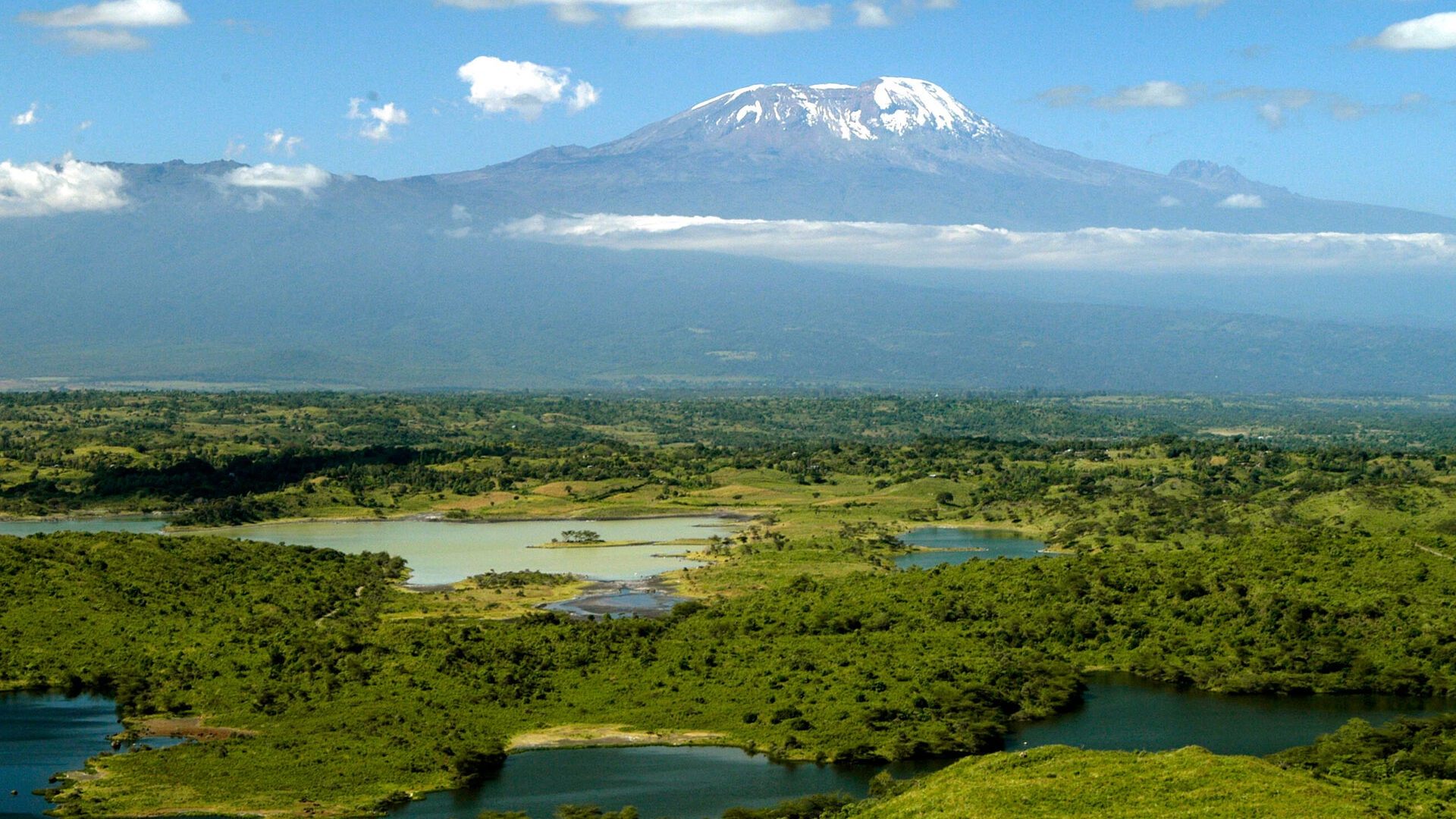
Fly Camping

Move between bush camps daily, walking in between. The purest form of East African safari — how it was done in the 1950s.

2–4 nights · From $480pp
— 04
Solitude Guaranteed

Katavi gets ~2,000 visitors per year. You will see no other vehicles on most drives. That's the main activity, really.

Built-in
★ ★ ★ ★ ★

"Three days in Katavi and we saw no other vehicles. Buffalo herds of a thousand. Hippo pods stacking on top of each other in the last river pools. Properly wild."

— Pete W. · Australia · October 2025
Best Time to Visit

When to Visit Katavi

Aug–Oct peak. Wet season largely inaccessible.

JanOff
FebOff
MarGood
AprOff
MayOff
JunPeak
JulPeak
AugPeak
SepPeak
OctPeak
NovGood
DecGood
Planning Your Visit

Practical Details

The key info for fitting this destination into your trip.

When to VisitAug–Oct peak. Wet season largely inacces
Typical Duration3–4 days
Pairs Well WithMahale (chimpanzees) — the classic weste
RegionWestern
Planning a trip to Katavi?

Plan Your Katavi Visit

Loading itinerary…
Saved Trips